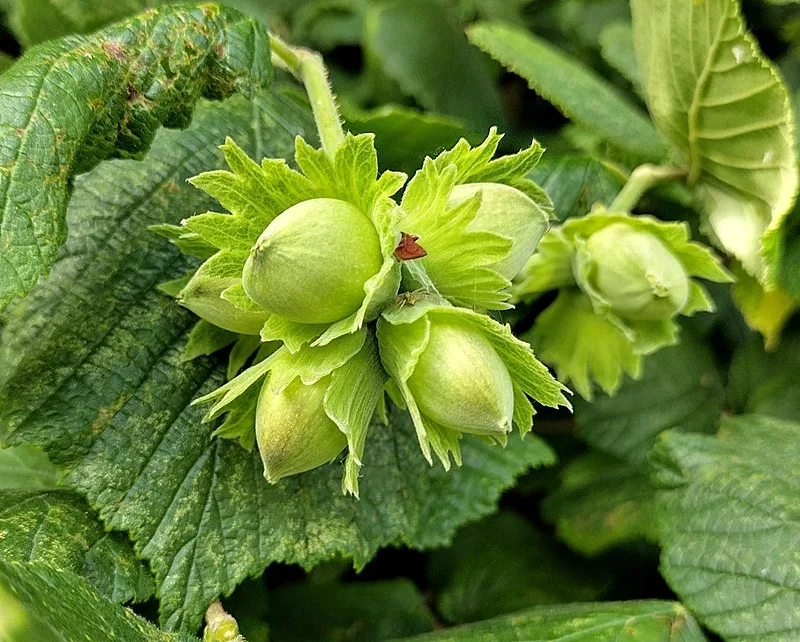
Common hazel is a shrub or small tree from the birch family (Betulaceae), botanically accepted as Corylus avellana L. The plant usually reaches 2 to 5 metres in height, forms a dense crown, and is able to spread through root suckers.
The stem is slender, with smooth greyish to ash-coloured bark. Common hazel is a monoecious species, meaning that male and female flowers occur on the same plant. The male flowers are arranged in catkins and appear before the leaves, usually from February to April.
The leaves are large, with a broad heart-shaped base, a pointed tip, and a finely hairy surface. The fruit is the hazelnut — a hard brown nut enclosed in a green husk.
Common hazel is widely distributed in Bulgaria. It grows in deciduous forests, on slopes, woodland edges, and in scrubland.
Basic Information
- Latin name: Corylus avellana L.
- German name: Haselnuss
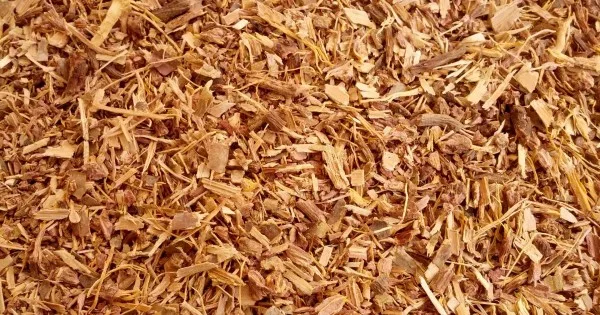
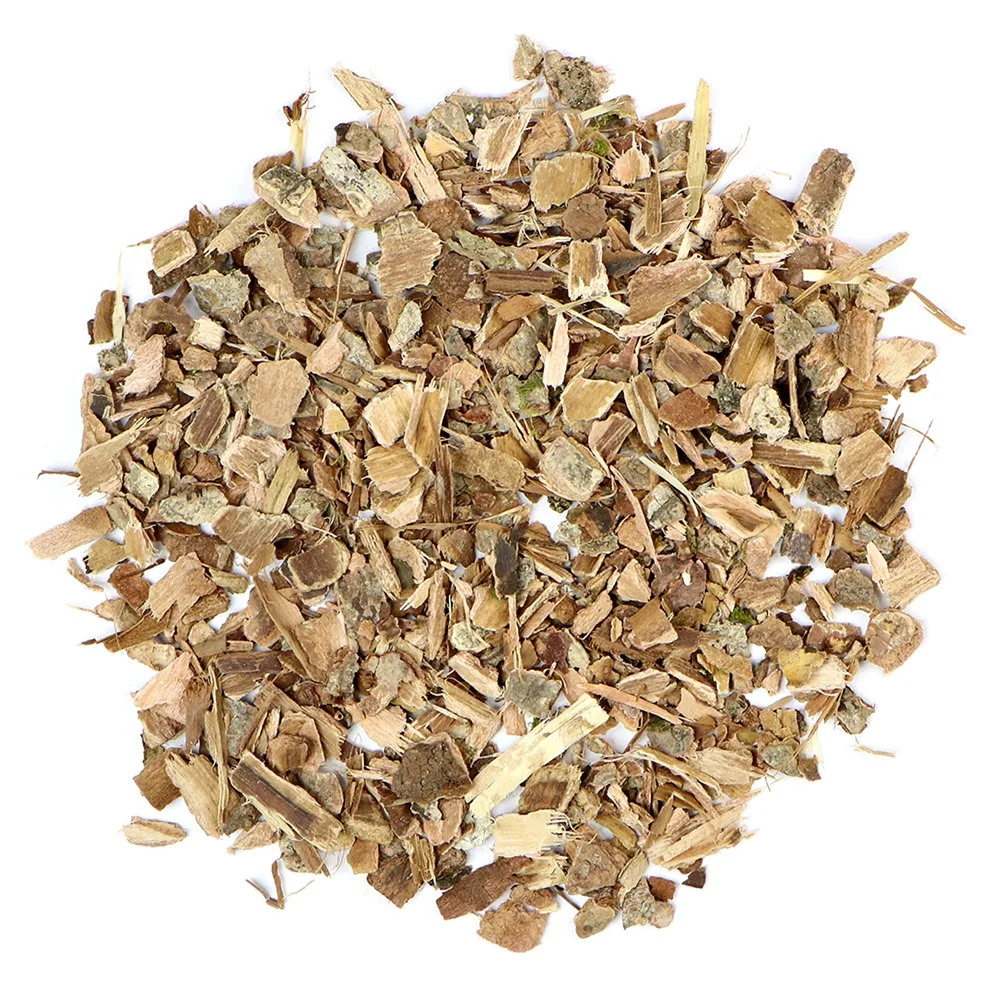
- Parts used: leaves (Folium Coryli) and bark (Cortex Coryli)
- Origin: Bulgaria
- Raw material type: wild-harvested and cultivated
- Bark harvest period: March – April
- Leaf harvest period: July – August
Other Names
- Hazel
- Hazelnut
Herb Characteristics
Common hazel is a well-known shrubby species with a dense crown, flexible branches, and large leaves. The leaves are one of the main plant parts used as botanical raw material and are harvested when fully developed.
The bark is collected in spring, during active sap flow, only from already cut branches. The raw material is dried in shaded, well-ventilated rooms to preserve its natural colour and botanical quality.
Chemical Composition
- tannins
- flavonoids
- betulin
- resinous acids
- proteins
- phenolic compounds
The leaves and bark of common hazel contain mainly tannins, flavonoids, and other phenolic compounds, which support their traditional use in various herbal formulations.
Suitable for the Production of
- herbal teas
- dry extracts
- liquid extracts
- tinctures
- herbal blends
- botanical extracts
- products for venous and capillary comfort
- topical herbal formulations
- natural cosmetic products
Medicinal Properties and Effects on the Body
Common hazel is traditionally associated with the following properties:
- anti-inflammatory activity
- antioxidant activity
- astringent action
- use in products for venous and capillary comfort
- use in topical skin formulations
- traditional use in products for vascular support
In traditional herbal practice, common hazel leaves and bark are used in products aimed at venous and capillary comfort, as well as in topical formulations for local skin care. The raw material is suitable for herbal blends and botanical extracts with clearly defined applications.
Forms Available
Available as:
- leaves (Folium Coryli) and bark (Cortex Coryli) – whole dried, cut, crushed, or powdered
Quality and Documentation
Upon request, the following may be provided:
- Certificate of Analysis (COA)
- technical documentation
- additional documents upon request
Inquiry
Contact us for current availability, samples, and a quotation based on the required quantities, preferred processing form, and raw material specifications.
Gallery
Product images