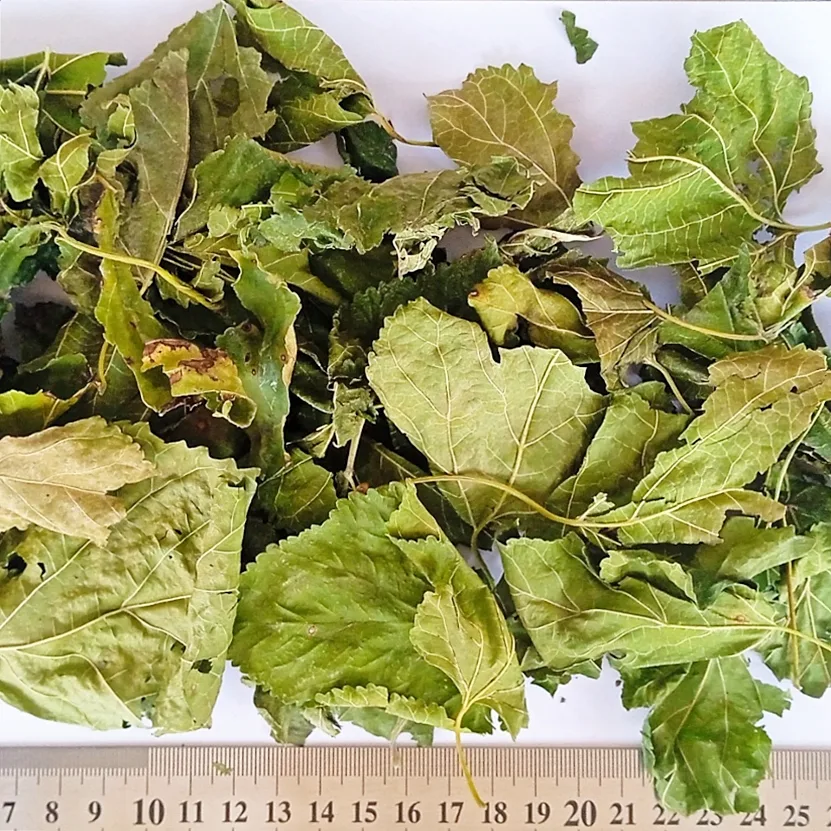
Description
Mulberry is a deciduous tree from the mulberry family (Moraceae), valued for both its fruits and leaves. This article covers white mulberry (Morus alba L.) and black mulberry (Morus nigra L.), both of which are used as botanical and food-grade raw materials.
The tree can reach around 10–15 metres in height and forms a broad, spreading crown with large ovate leaves. The leaf margins may be smooth or slightly toothed. The flowers are small, while the fruits are juicy, elongated, and range in colour from white to dark purple, depending on the species.
Mulberry is widely found in Bulgaria, especially in yards, gardens, along roadsides, and in warmer regions. The leaves are a valuable raw material for herbal blends, functional foods, extracts, and specialised botanical products.
Basic Information
- Latin name: Morus alba L. / Morus nigra L.
- Parts used: leaves (Folia Mori), fruits (Fructus Mori)
- Origin: Bulgaria
- Raw material type: wild-growing and cultivated
- Leaf harvest period: May – August
- Fruit harvest period: June – July, at full maturity
Herb Characteristics
Mulberry is a well-known tree with large leaves and juicy fruits used in both the food and herbal industries. The leaves are harvested while young, fresh, and fully developed.
The fruits are collected at full maturity. The raw material is dried at low temperature to preserve its natural colour, chemical profile, and overall botanical quality.
Chemical Composition
- flavonoids
- organic acids
- tannins
- vitamin C
- minerals
- phytosterols
- anthocyanins
- pectins
- vitamins
- antioxidants
The leaves and fruits of Morus species contain phenolic compounds, flavonoids, anthocyanins, vitamins, minerals, and other bioactive constituents. This composition supports their use as functional botanical raw materials.
Suitable for the Production of
- herbal teas
- herbal blends
- dry extracts
- liquid extracts
- food supplements
- functional foods
- functional beverages
- botanical extracts
- cosmetic formulations
- plant powders
Medicinal Properties and Effects on the Body
Mulberry is traditionally associated with the following properties:
- antioxidant activity
- use in products supporting normal metabolism
- application in functional foods and beverages
- use in botanical extract products
- application in cosmetic formulations for sensitive skin
- nutritional value of the fruits due to their natural content of anthocyanins, pectins, and antioxidants
In traditional use, mulberry leaves are included in herbal blends and botanical extracts, while the fruits are valued as a food ingredient. Thanks to their natural content of flavonoids, anthocyanins, pectins, and antioxidants, mulberry raw materials are used in food, functional, and cosmetic products.
Forms Available
Available as:
- dried leaves (Folia Morus nigra) – crushed, cut to custom sizes according to client requirements, or powdered
Quality and Documentation
Upon request, the following may be provided:
- Certificate of Analysis (COA)
- technical documentation
- additional documents upon request
Inquiry
Contact us for current availability, samples, and a quotation based on the required quantities, preferred processing form, and raw material specifications.