Raspberry is a perennial semi-shrub from the rose family (Rosaceae), widely distributed in Bulgaria and other temperate regions. The species is botanically accepted as Rubus idaeus L. ,
The plant reaches up to around 1.5 metres in height and develops numerous root suckers. The fruit-bearing canes are biennial and woody, while the first-year shoots are usually non-fruiting. The leaves are alternate and pinnate, usually composed of 3 to 5, sometimes up to 7 leaflets, with coarsely serrated margins and pointed tips.
The upper leaf surface is green, while the underside is silvery-white and softly hairy. The flowers are white and bisexual, with a five-part calyx, five petals, and numerous stamens. Raspberry flowers in May and June. The fruit is red or yellow, juicy, aromatic, and made up of many small drupelets.
Raspberry is a valuable botanical and food-grade raw material. The leaves are used in herbal teas, blends, and botanical extracts, while the fruits are widely used in the food industry.
Basic Information
- Latin name: Rubus idaeus L.
- Parts used: leaves (Folia Rubi idaei), fruits (Fructus Rubi idaei)
- Origin: Bulgaria
- Raw material type: wild-harvested and cultivated
- Leaf harvest period: July – September, after flowering
- Fruit harvest period: at full maturity
Herb Characteristics
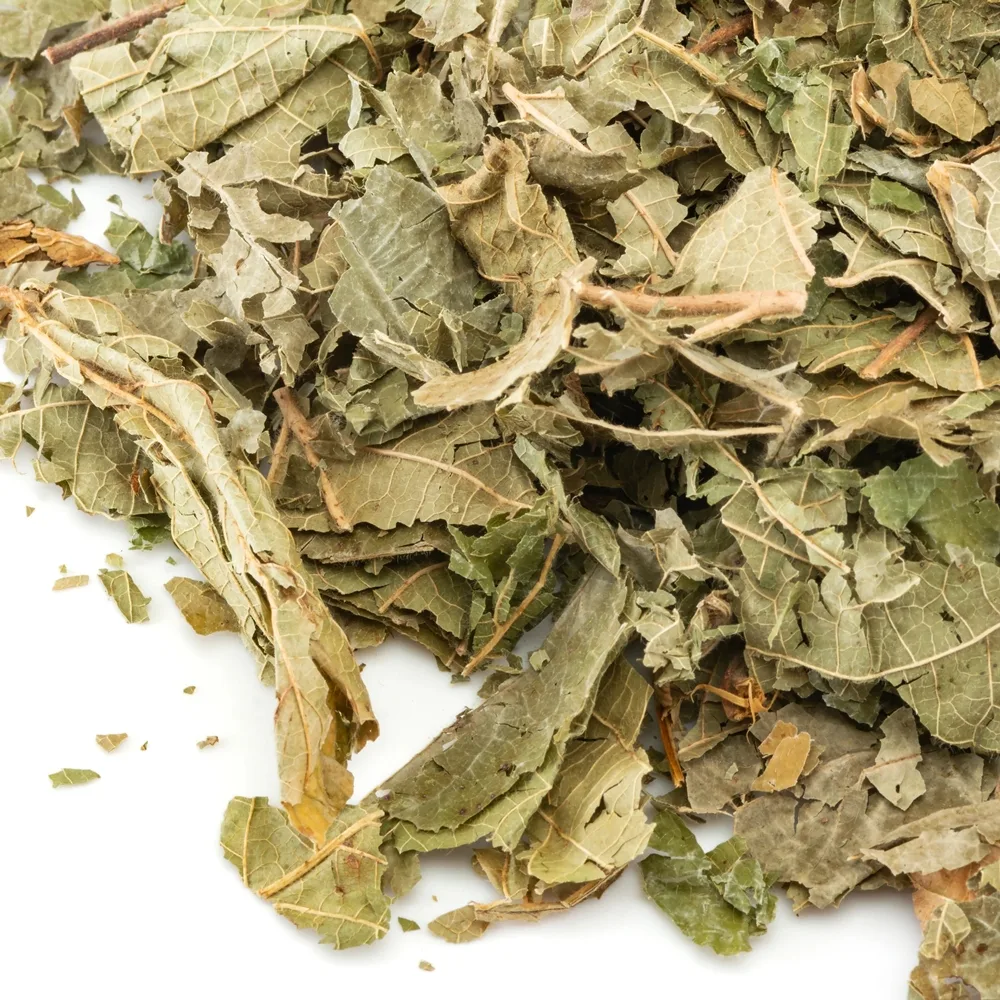
Raspberry is a well-known semi-shrub with flexible canes, root suckers, and aromatic fruits. The leaves are one of the main plant parts used as botanical raw material. They are collected after flowering, when fully developed and fresh.
The raw material is dried in well-ventilated areas away from direct sunlight or in drying facilities at temperatures up to 45°C. Proper drying helps preserve the natural colour, active constituents, and overall botanical quality of the material.
Chemical Composition
- flavones
- tannins
- vitamin C
- provitamin A
- malic acid
- citric acid
- potassium
- magnesium
- carotene
- phosphorus
- organic acids
- sugars
- pectin
- vitamin P
- purine compounds
Raspberry leaves contain flavonoids, tannins, and other polyphenolic compounds, which support their traditional use in herbal products. ,
Raspberry seed cake contains fibre, ellagic acid, fatty acids, and tannins. Raspberry seeds are also valued as a raw material for oil production, with a high content of unsaturated fatty acids. ,
Suitable for the Production of
- herbal teas
- herbal blends
- dry extracts
- liquid extracts
- tinctures
- botanical extracts
- digestive support products
- products for the mouth and throat
- women’s health products
- food and functional products
- plant powders
- raw materials obtained after cold pressing
Medicinal Properties and Effects on the Body
Raspberry is traditionally associated with the following properties:
- anti-inflammatory activity
- astringent action
- antioxidant activity
- general wellness support
- use in herbal blends for digestion
- use in products for the mouth and throat
- use in formulations for women’s health
In traditional herbal practice, raspberry leaves are used in teas and herbal blends intended for digestion, the mouth and throat, and women’s health. The fruits are valued as a food ingredient with natural content of vitamins, organic acids, and plant compounds.
Forms Available
Available as:
- leaves (Folia Rubi idaei) – whole dried, crushed, cut to custom size upon request, or powdered
- raspberry seed cake – finely milled flour from raspberry seeds after cold pressing, rich in fibre, ellagic acid, fatty acids, and tannins
Quality and Documentation
Upon request, the following may be provided:
- Certificate of Analysis (COA)
- technical documentation
- additional documents upon request
Inquiry
Contact us for current availability, samples, and a quotation based on the required quantities, preferred processing form, and raw material specifications.