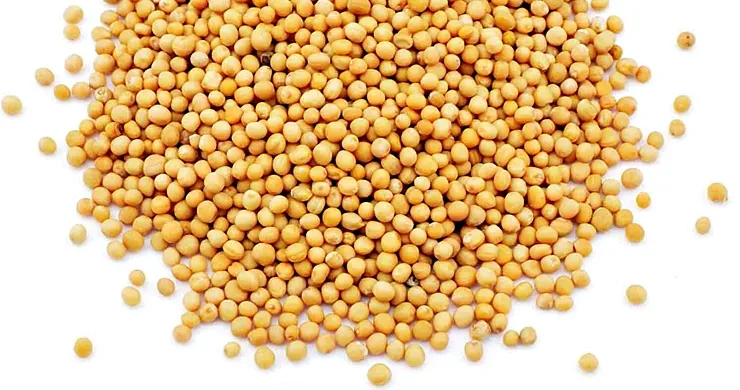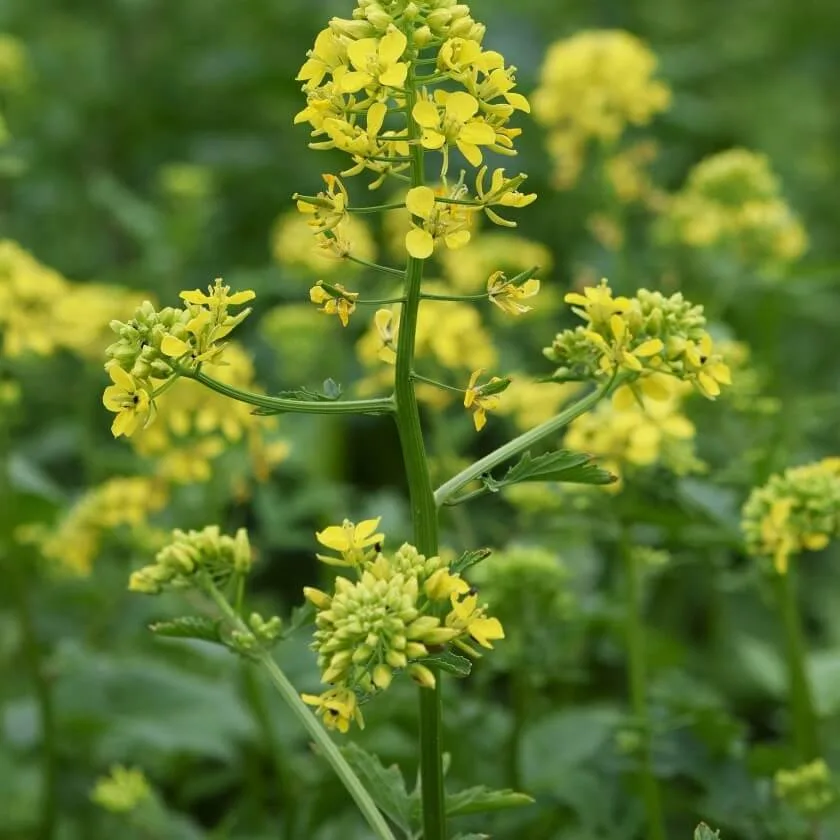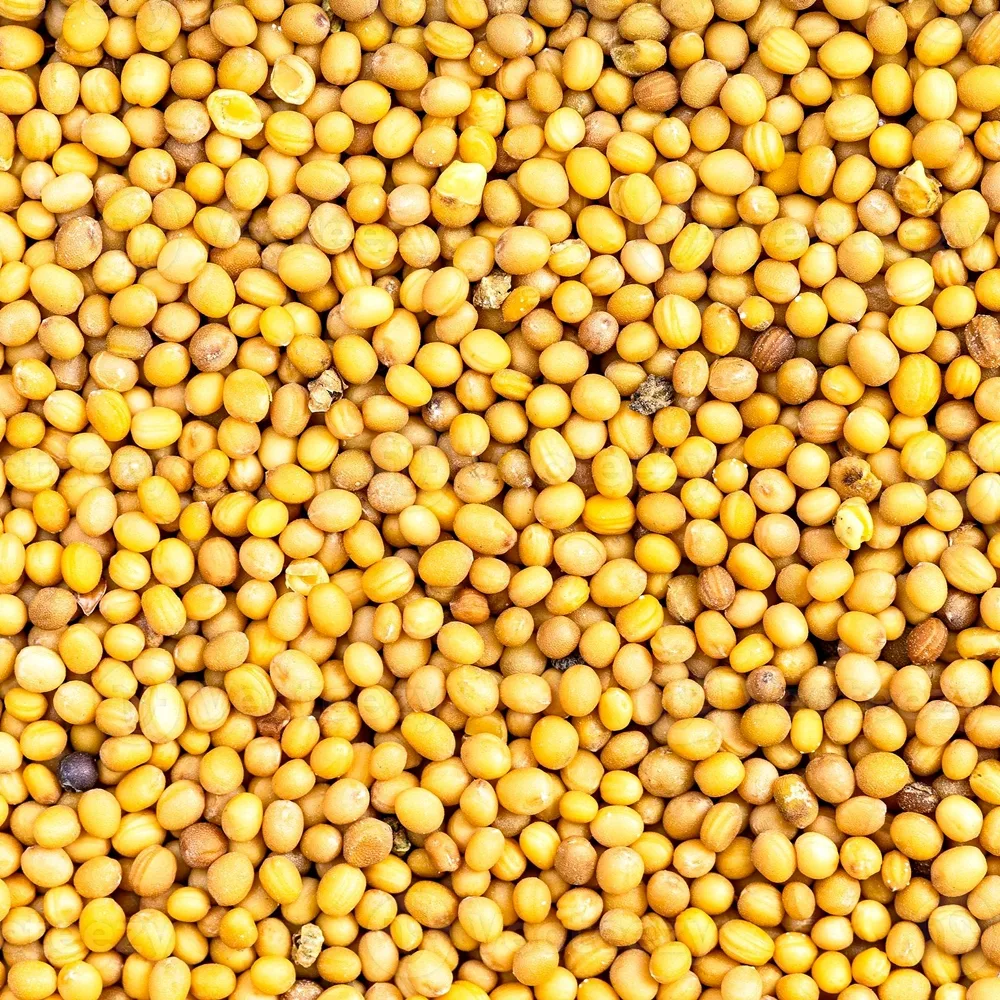
White mustard (Sinapis alba L.) is an annual herbaceous plant from the Brassicaceae family, cultivated for its mature pale-yellow to yellowish seeds. The plant develops an upright stem, branches moderately and usually reaches about 60–70 cm in height. The flowers are yellow and arranged in raceme-like inflorescences, while the fruit is a pod containing the small seeds. White mustard is widespread in Europe and is used as a spice, food and herbal raw material.
Basic Information
- Latin name: Sinapis alba L.
- Synonym: Brassica alba (L.) Rabenh.
- English name: White Mustard / Yellow Mustard
- German name: Weißer Senf
- Part used: seeds (Semen Sinapis albae)
- Subcategory: seeds
- Raw material type: cultivated
- Harvest period: June, after the pods turn yellow and begin to dry
Raw Material Characteristics
The seeds are collected when the pods turn yellow, begin to dry and the seeds reach their characteristic colour. High-quality raw material should be well cleaned, dry, uniform and free from foreign matter. White mustard has a milder taste than black mustard and is valued for the production of milder mustards, spice blends and food products.
Chemical Composition
The seeds contain fixed oil, proteins, mucilage, minerals, phytochemical compounds, the enzyme myrosinase and the glucosinolate sinalbin. In contact with water, sinalbin is broken down and forms compounds responsible for the characteristic taste and warming effect.
Suitable for the Production of
- mustard and sauces
- spice blends
- marinades and preserved vegetables
- food products
- herbal powders and flours
- external warming products with controlled use
Medicinal Properties and Effects on the Body
White mustard has the following properties:
- appetite-stimulating
- warming
- anti-inflammatory
- antimicrobial
- supports digestion
- stimulates local circulation when used externally
Important Notice
Ground white mustard seeds may irritate the skin, mucous membranes and gastrointestinal tract if used improperly, for too long or in excessive amounts. External applications should be short-term and controlled, especially on sensitive skin.
Forms Available
- seeds (Semen Sinapis albae) – whole dried, crushed, cut to custom size upon request, or ground into powder/flour
Quality and Documentation
Upon request, a Certificate of Analysis (COA), technical documentation, batch traceability and additional documents may be provided.
Inquiry
Contact us for availability, bulk quantities, samples and a custom quotation based on the required raw material specifications.
Gallery
Product images