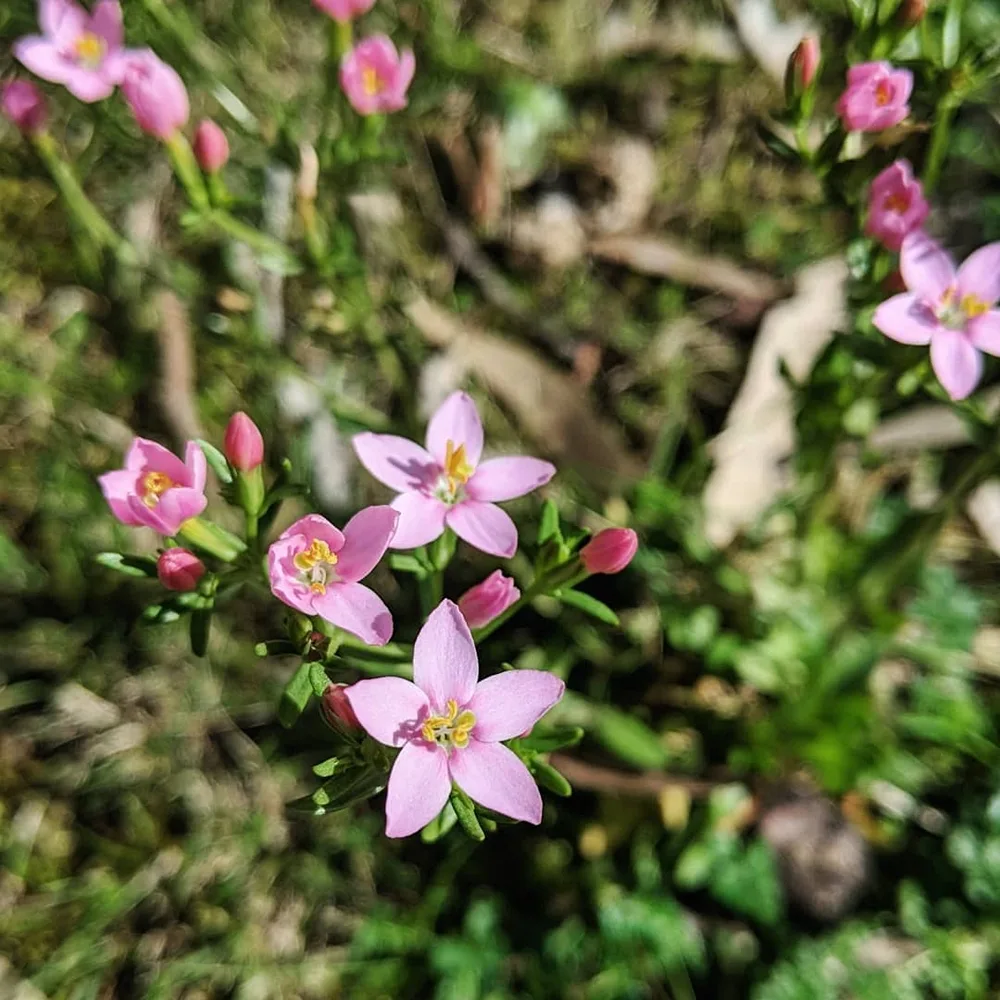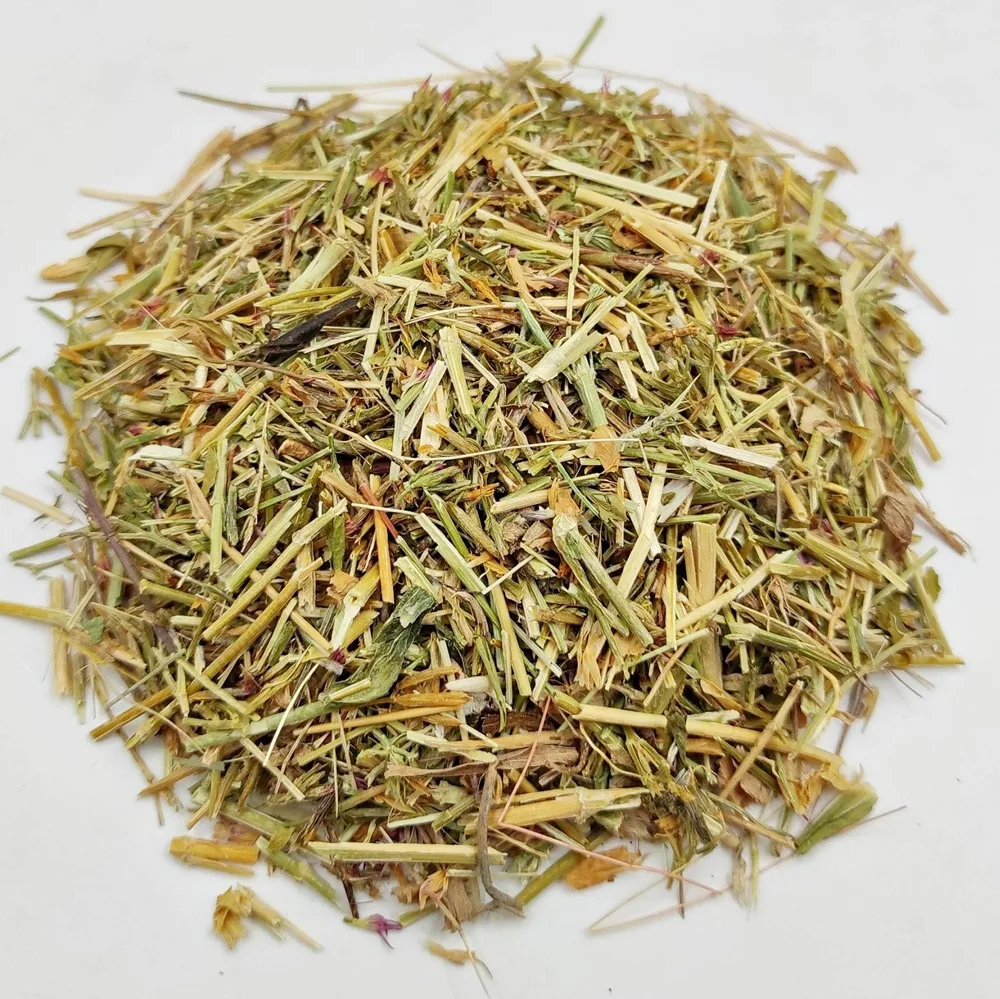
Common centaury is an annual or biennial herb from the gentian family (Gentianaceae), widely recognised as one of the classic European bitter herbs. It is valued for its distinct bitter taste and its long-standing use in herbal products intended to support appetite and digestion.
The plant develops an upright, four-angled stem that branches near the top and usually reaches up to about 50 cm in height. The leaves are opposite, elliptic to lance-shaped, with the basal leaves forming a rosette. Its flowers are pink to reddish-pink and arranged in corymb-like clusters, while the fruit is a narrow capsule containing numerous small seeds.
Common centaury grows throughout Bulgaria in dry meadows, grassy areas, sandy ground, and stony habitats. It is a valuable raw material for the herbal, extraction, and food industries.
Basic Information
- Latin name: Centaurium erythraea Rafn.
- Part used: aerial parts (Herba Centaurii)
- Origin: Bulgaria
- Raw material type: wild-harvested
- Harvest period: June – August, at the beginning of flowering
Herb Characteristics
Common centaury is a delicate herb with a well-formed basal rosette and an upright flowering stem. The commercial raw material consists of the flowering tops, usually cut at around 15–20 cm from the upper part of the plant.
The flowers are small but easily recognised by their pink-red colour. The herb is dried carefully in the shade or at controlled temperatures in order to preserve its natural colour, bitter taste, and overall raw material quality.
Chemical Composition
- bitter glycosides
- gentiopicroside
- swertiamarin
- sweroside
- iridoids
- flavonoids
- phenolic compounds
- organic acids
- resinous substances
- traces of essential oil
- vitamin C
The bitter secoiridoid compounds are the most characteristic constituents of common centaury and are largely responsible for its traditional use in appetite and digestive formulations.
Suitable for the Production of
- herbal teas
- dry extracts
- liquid extracts
- tinctures
- herbal blends
- botanical extracts
- digestive support products
- bitter botanical formulations
- functional plant-based ingredients
Medicinal Properties and Effects on the Body
Common centaury is traditionally associated with the following properties:
- appetite stimulation
- digestive support
- support for gastric and bile secretion
- carminative action
- general tonic use
- traditional use in digestive comfort products
In European herbal practice, common centaury is used mainly in products intended for low appetite, post-meal heaviness, and general digestive discomfort. Because of its pronounced bitterness, it is also widely used in bitter herbal blends and specialised botanical formulations.
Forms Available
Available as:
- whole dried herb (Herba Centaurii)
- crushed herb
- cut herb in custom sizes upon request
- herbal powder
Quality and Documentation
Upon request, the following may be provided:
- Certificate of Analysis (COA)
- technical documentation
- additional documents upon request
Inquiry
Contact us for current availability, samples, and a quotation based on the required quantities, preferred processing form, and raw material specifications.
Gallery
Product images