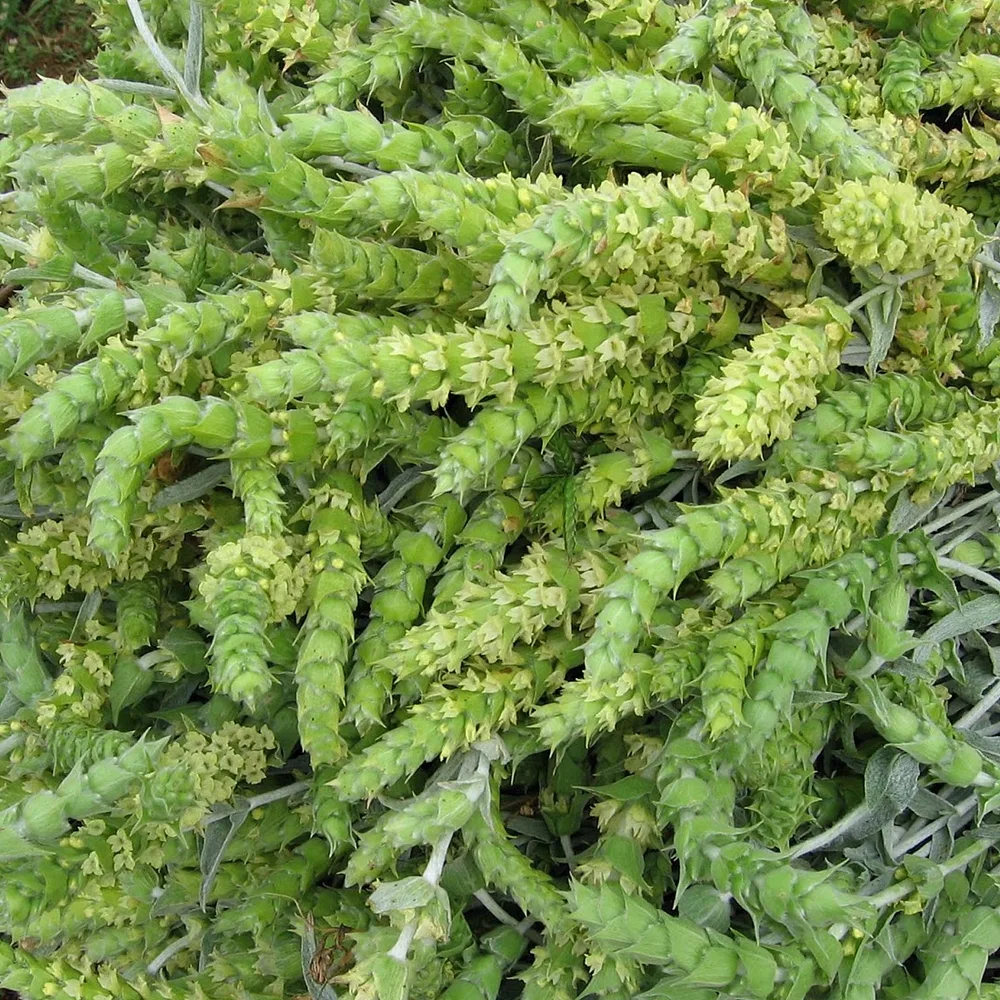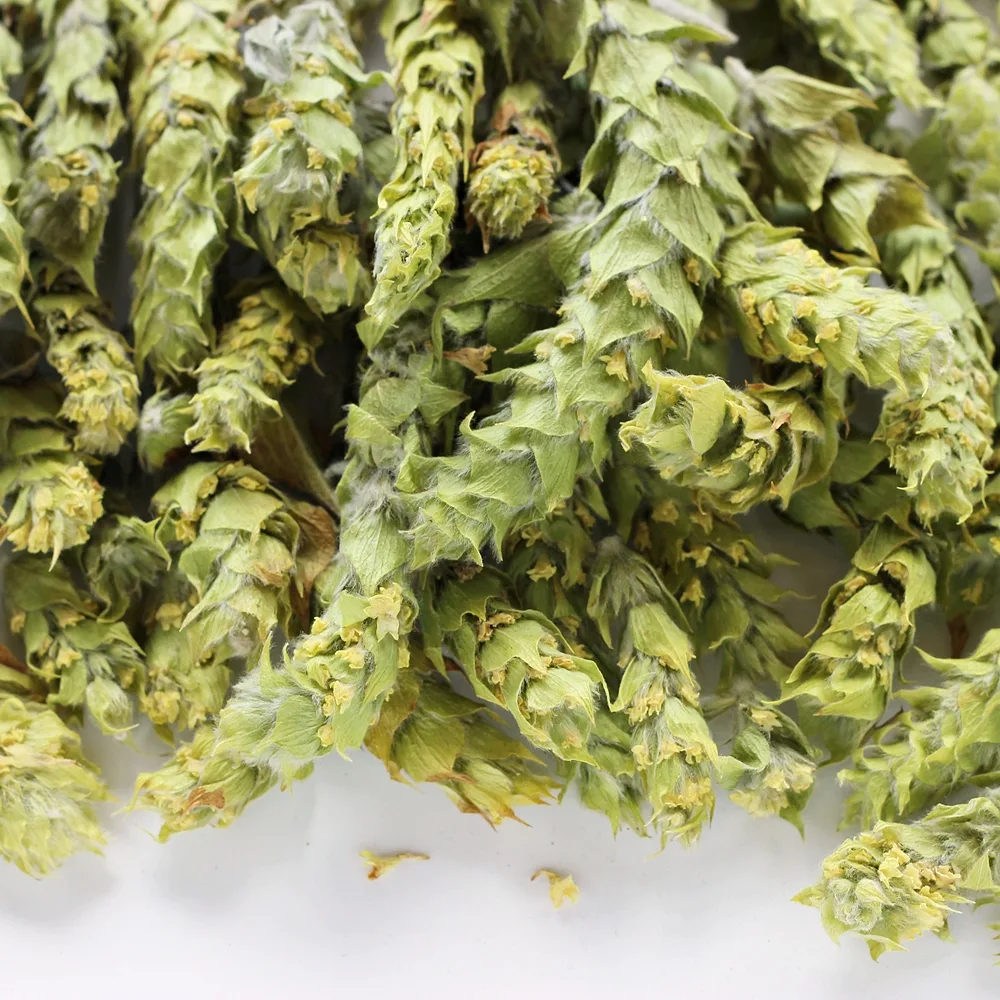
Mursal Tea is a perennial herb from the mint family (Lamiaceae), botanically accepted as Sideritis scardica Griseb. The species is native to the Balkan Peninsula and occurs naturally in Bulgaria, Greece, and parts of the northwestern Balkans. ,
It grows in mountainous areas above 1,000 metres and is widely regarded as one of Bulgaria’s signature herbal species. The plant develops upright stems, silvery-green leaves covered with fine hairs, and dense spike-like inflorescences with yellow flowers. , ,
Mursal Tea is a valued botanical ingredient for the food, herbal, and cosmetic industries. Its consistent phytochemical profile and growing demand from cultivated sources have established it as a premium raw material in international B2B trade. , ,
Basic Information
- Latin name: Sideritis scardica Griseb. ,
- Parts used: aerial parts (Herba Sideritis scardicae), flowers – upon request ,
- Origin: Bulgaria ,
- Raw material type: wild-harvested and cultivated ,
- Harvest period: June – August, during active flowering ,
Herb Characteristics
Mursal Tea is a mountain species with a well-developed root system and compact upright stems. The leaves are narrow, grey-green, and finely pubescent, giving the plant its characteristic silvery appearance. ,
The inflorescences are dense and spike-like, carrying numerous yellow flowers. The species is well adapted to high-altitude, rocky, and well-drained terrain, which adds to its value as a botanical raw material with clear geographic identity. , ,
For commercial use, the aerial parts are the primary raw material and are suitable for drying, cutting, milling, and extraction.
Chemical Composition
- essential oil
- flavonoids
- phenolic acids
- phenylpropanoid glycosides
- verbascoside
- tannins
- iridoid glycosides
- antioxidant compounds , ,
The phytochemical profile of Mursal Tea is defined by a high content of polyphenols, flavonoids, and phenolic acids. Among the compounds most frequently highlighted in recent analyses are verbascoside and derivatives of isoscutellarein, methylisoscutellarein, and hypolaetin. ,
Suitable for the Production of
- herbal teas
- dry extracts
- liquid extracts
- tinctures
- functional beverages
- food supplements
- natural cosmetic products
- botanical extracts
- premium botanical formulations
- Mursal Tea absolute
Medicinal Properties and Effects on the Body
Mursal Tea is traditionally associated with the following properties:
- antioxidant activity
- support for respiratory comfort
- digestive support
- general wellness support
- use in immune support formulations
- traditional use in Balkan herbal practice , ,
Traditionally, Mursal Tea is used in products developed for respiratory comfort, digestive support, and overall vitality. Owing to its rich phytochemical profile, it is widely included in teas, extracts, functional beverages, food supplements, and cosmetic formulations. , ,
Forms Available
Available as:
- whole dried Mursal Tea herb (Herba Sideritis scardicae)
- crushed Mursal Tea herb
- cut material in custom sizes upon request
- herbal powder
- Mursal Tea absolute
Quality and Documentation
Upon request, the following may be provided:
- Certificate of Analysis (COA)
- technical documentation
- additional documents upon request
Inquiry
Contact us for current availability, samples, and a quotation based on the required quantities, preferred processing form, and raw material specifications.
Gallery
Product images