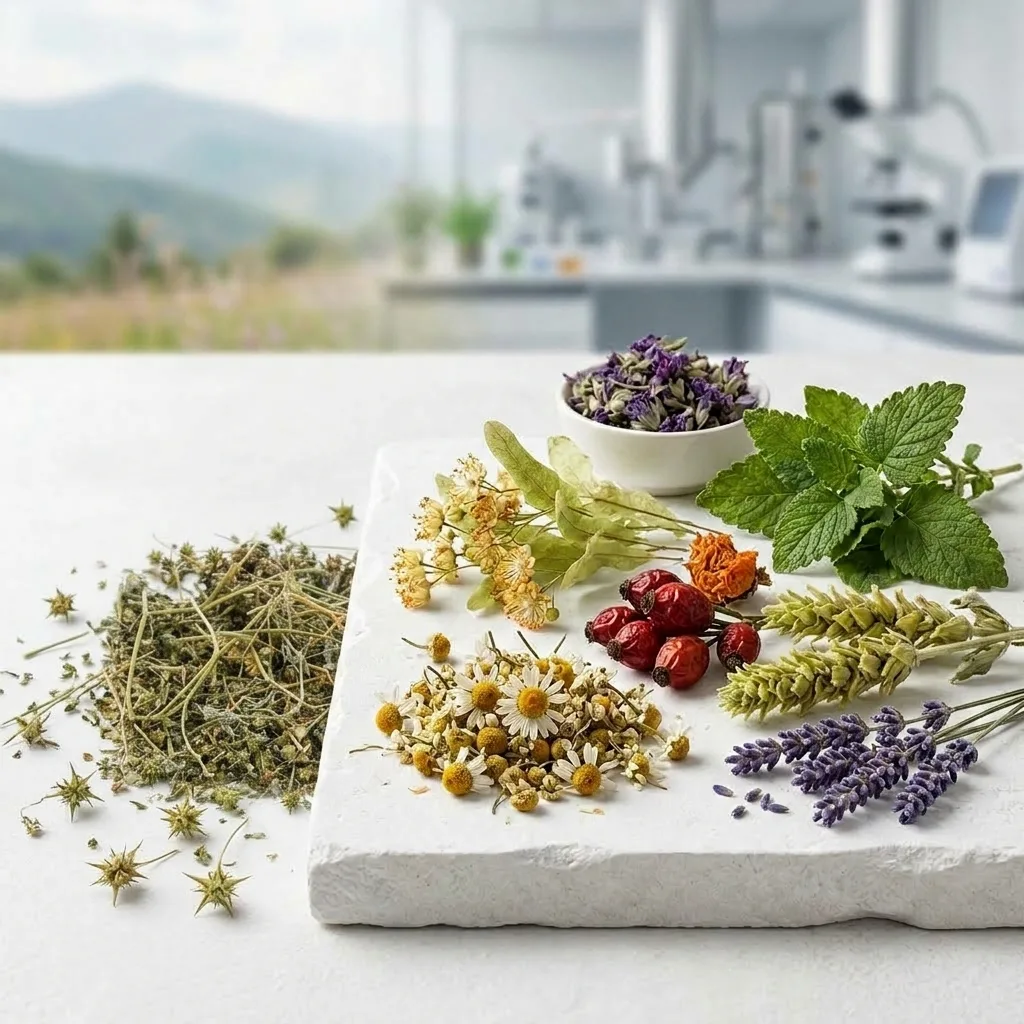
Bulgarian Herbs on the Global Market: How Origin, Processing, and Phytochemical Composition Shape the Value of Botanical Ingredients
When Does a Herb Become a Valuable Ingredient for International Markets?
For professional buyers, a herb is far more than a plant with an attractive appearance, a pleasant aroma, or a competitive price. It is a botanical ingredient that must meet specific requirements for identity, bioactive compound content, safety criteria, traceability, and suitability for a specific end-use application.
This is especially relevant today as manufacturers of herbal teas, botanical extracts, food supplements, cosmetics, and natural ingredients compete in a global marketplace where quality is increasingly measured through analytical data rather than visual assessment alone.
That is one of the reasons Bulgarian herbs continue to attract the attention of international buyers seeking reliable botanical ingredients with traceable origins and clearly defined quality characteristics.
Bulgaria's Role in the Global Botanical Supply Chain
Bulgaria has a long tradition of harvesting and processing Medicinal and Aromatic Plants (MAPs)**. According to data from the Bulgarian Ministry of Agriculture and Food, around 15,000 tonnes of medicinal and aromatic plants are harvested and processed annually, with nearly 90% destined for export markets. More than 450 plant species are harvested nationwide, while international trade is concentrated around approximately 150 commercially important species.
According to an official statement by the Bulgarian Minister of Agriculture and Food, Georgi Tahov, the most sought-after Bulgarian herbs include:
- Rosehip (Rosa canina)
- Linden (Tilia spp.)
- Chamomile (Matricaria chamomilla)
- Lemon Balm (Melissa officinalis)
- Lavender (Lavandula angustifolia)
- Mursal Tea (Sideritis scardica)
- Tribulus (Tribulus terrestris)
These plants are widely used in:
- Herbal teas and tea blends
- Botanical extracts
- Food supplements
- Cosmetics
- Natural flavour and fragrance ingredients
- Essential oils
Together, these categories account for a substantial share of global demand for Bulgarian botanical ingredients.
For companies such as Vesselino Ltd., serving customers across multiple industries, understanding the relationship between plant origin, and end-use application is central to delivering the right ingredient for each market.
Quality Starts Long Before Drying
For professional buyers, the critical question is not simply how a herb looks, but what it contains.
The concentration and composition of bioactive compounds are influenced by numerous factors:
- Botanical species
- Plant part used
- Genetic characteristics
- Geographic origin
- Climatic conditions
- Soil composition
- Altitude
- Harvest timing
- Harvesting methods
- Drying practices
- Storage conditions
- Subsequent processing
As a result, two batches of the same species can exhibit noticeably different analytical characteristics and varying suitability for extraction, standardisation, or product formulation.
Bioactive Compounds Help Define Market Value
In many industrial applications, the concentration and balance of key bioactive compounds play a major role in determining ingredient value.
For example:
- Chamomile is prized for constituents such as chamazulene.
- Lemon balm is valued for rosmarinic acid and other phenolic compounds.
- Rosehip contains polyphenols, organic acids, and vitamin C.
- Peppermint is known for its menthol-rich profile.
- Thyme is an important source of thymol and carvacrol.
- Lavender is widely sought after for the distinctive composition of its essential oil.
Research on Mursal Tea (Sideritis scardica) has shown that its phytochemical composition varies according to the geographic origin of the plant material. Studies have identified differences in the levels of polyphenols, flavonoids, and other compounds among samples originating from Bulgaria, North Macedonia, Turkey, and Albania.
Beyond analytical testing, experienced processors can often identify quality differences through visual inspection and aroma evaluation.
The Global Market: Value Goes Beyond the Plant Itself
International trade in medicinal and aromatic plants continues to expand. Trade data for products classified under HS Code 1211* indicate that the global market nearly doubled in value between 2010 and 2023. By 2023, worldwide imports had reached approximately USD 4.25 billion, while exports totalled around USD 4.18 billion. Leading importing countries include the United States, Germany, and Japan.
Today, commercial demand is driven less by individual herb species and more by broader product categories, including:
- Medicinal and aromatic plants used for botanical extracts
- Herbal tea ingredients
- Aromatic plants for essential oil production
- Botanical ingredients for cosmetic formulations
- Plant-based ingredients for functional foods and beverages
As the industry matures, herbs are increasingly evaluated based on their intended application rather than viewed as interchangeable commodities. A tea manufacturer, for instance, often prioritises different characteristics than a producer of standardised extracts or a cosmetics company.
What Different Markets Are Looking For
Europe
European buyers place strong emphasis on traceability, responsible harvesting practices, proper processing, and regulatory compliance.
North America
North America remains one of the largest markets for botanical ingredients used in food supplements, functional products, and plant extracts. Standardisation and comprehensive analytical documentation are often critical factors in supplier approval.
Asia
Across Asia, traditional systems of herbal use continue to drive strong demand for both botanical ingredients and value-added plant-based products.
Despite regional differences, one trend is universal: buyers increasingly expect traceability, quality assurance, and reliable analytical documentation throughout the supply chain.
Where Bulgarian Herbs Are Used Today
Many of Bulgaria's best-known herbs serve multiple industries thanks to their unique phytochemical composition.
Common applications include:
- Herbal teas and tea blends
- Botanical extracts
- Food supplements
- Floral waters
- Essential oils
- Cosmetic formulations
- Natural flavour and fragrance ingredients
- Functional foods and beverages
For manufacturers, selecting the right botanical ingredient is not simply a matter of choosing the correct species. The material must also meet specific technical, processing, and formulation requirements.
Key Trends Shaping the Future of the Industry
Several developments are defining the future of medicinal and aromatic plants:
- Growing demand for botanical extracts and plant-based ingredients
- Continued consumer preference for natural ingredients over synthetic alternatives
- Increasing importance of traceable sourcing
- Stricter quality assurance and standardisation requirements
- Greater focus on sustainable wild harvesting
- More value creation through processing
- Rising demand for analytically characterised ingredients
From Plant Origin to Industrial Performance
For international buyers, the challenge is rarely finding a particular herb. The real question is whether a specific batch will perform as required in the final product.
Two batches of chamomile, lemon balm, rosehip, tribulus, or Mursal tea may appear nearly identical, yet differences in origin, climate, harvesting conditions, the plant part used, drying methods, and storage practices can significantly influence extraction efficiency, standardisation outcomes, and formulation performance.
For companies active in the global botanical industry, these differences are not merely technical details. They directly affect product quality, manufacturing consistency, and commercial success.
This is the environment in which Vesselino Ltd. has operated for more than three decades, supplying dried herbs, tea ingredients, botanical extracts, essential oils, floral waters, and other plant-derived ingredients to customers in more than 55 countries worldwide.
Conclusion
Bulgarian herbs continue to play an important role in international supply chains for medicinal and aromatic plants. They are used across a wide range of applications, including herbal teas, botanical extracts, food supplements, cosmetics, and essential oils.
As market expectations continue to evolve, simply having access to a particular herb is no longer enough. Professional buyers are increasingly focused on factors such as origin, consistency, processing methods, traceability, and analytical quality.
As a result, suppliers are expected to provide much more than access to botanical ingredients. They are increasingly valued as partners capable of connecting botanical origin with the technical requirements of modern manufacturing. This is where Vesselino Ltd. creates value by connecting the Bulgarian origin of botanical raw materials with the practical needs of manufacturers of herbal teas, extracts, food supplements, essential oils, floral waters, and other natural products for international markets.
Ultimately, for today's buyers, the true value of a botanical ingredient extends far beyond the plant itself. It lies in the combination of origin, phytochemical composition, processing expertise, traceability, and quality assurance that supports consistent performance in the final product.
____________________________________________________________________________________________________________________________________________________________________________________________________________________________
Notes:
*HS Code 1211 is an international customs classification covering a substantial portion of medicinal and aromatic plant materials used in perfumery, pharmaceutical applications, and related industries.
**Medicinal and Aromatic Plants (MAPs) is the internationally recognised term used for plant species utilised in pharmaceuticals, food supplements, herbal teas, cosmetics, perfumery, and numerous other applications.
Sources and References:
1. Ministry of Agriculture and Food of the Republic of Bulgaria (2025) – data on the production, harvesting and export of medicinal and aromatic plants in Bulgaria.
2. Global Trade of Medicinal and Aromatic Plants: A Review, Journal of Agriculture and Food Research (2025).
3. EUROPAM Guidelines for Good Agricultural and Collection Practice (GACP) for Medicinal and Aromatic Plants (2022).
4. European Medicines Agency (EMA) – Herbal Medicinal Products.
5. Plant-based Medicinal and Cosmetic Products, European Commission / EIP-AGRI (2020).
6. Polyphenol Profile and Biological Activity of Extracts from Sideritis scardica (2025).